
Intro0:00
对 ,有些事情不是钱就能办到的 。
嗯 。 你是觉得有比钱更值得追求的 ?
Yes。 钱 , 钱 ,不能光看钱说话 。
你希望以后你成为足球巨星之后, 你的转会费达到多少钱 ?
六七千万吧 。
七千万 ? 人民币还是美金啊 ?
美元 。
哦 , 美元 。
比赛开始 , 卢翔的起跑非常的顺 ,他目前排在第一位 。 旁边的是特拉梅尔 · 奥里加尔斯 , 卢翔处于领先的位置 。
卢翔 , 卢翔赢了 , 卢翔赢了 。
各位好 , 欢迎收听 《 翻转体育 》。 这是一档致力于丰富中文世界体育叙事的节目 。 我是猎人, 欢迎各位发邮件告诉我你的想法和建议 ,也欢迎直接在微博上互动 。
邮件的地址和微博都可以在本节目的 show notes,也就是节目的介绍里找到 。
各位好 , 这一期呢有一些特殊 ,因为这一期大家可以从标题上看出我又开了一个新的系列 , 叫做 " 地狱 "。
Series Concept1:26
那我指的地狱就是说 , 这个系列的节目我会 , 嗯 , 专门我会我会尝试去邀请来自各个地方的嘉宾 , 或者我自己去一个特殊的地区 , 一个可能 。
然后我想要去了解当地的体育文化是怎么形成的 , 或者是我们很熟悉的一个城市 , 或者是 , 嗯 , 一个地区的文化 , 那在他们那儿体育是怎么被看待的 , 然后体育是怎么跟当地形成联系的 。
也就是说 , 嗯 , 我相当于是 , 嗯 , 希望用这个节目的这个系列来寻找 , 嗯 , 当地的体育文化 。 那为什么 , 首先为什么是体育文化呢 ?
我觉得如果大家接受把文化 , 嗯 , 当作一种比较泛的链接 , 就不是非常狭义的定位 , 嗯 , 跟比如说跟国家挂钩 , 跟种族挂钩 。
那文化可以视作比如说互联网有自己的文化 , 甚至有各种各样的小的亚文化圈 。 那尤其在当代 , 你可以把文化切得很碎的时候 , 体育自然也可以被视为一种文化 。
那为什么我想要关注它呢 ? 也是还有一个原因 , 就是我毕竟在做一档中文节目 , 所以我在做节目的时候 , 看事情的视角都是站在 , 嗯 , 这个放在一个中文的视角下是什么样的 。
所以跟体育文化相关 , 那我一直都好奇 , 就是中国的体育文化是什么样的 。 那为什么这个例子很特殊呢 ?
因为我觉得 , 尤其是职业体育 , 或者是体育作为一种竞技运动 , 对于中国来说其实还是相对陌生的 。
就是对于这个国家 , 相对于它总体的历史来说 , 体育文化是一个比较外来的事物 。 那我举一个例子 , 就是 , 嗯 , 我有时候跟朋友聊天 , 我聊到就像足球 , 它现在被认为是一个世界性 、 世界范围的运动 。
但是足球你可以说它在世界上绝大地方 、 绝大多数的地方扩张 , 它都是跟殖民主义是挂钩的 , 它都是几乎是跟着英国的一代一代的殖民者走向了世界其他地方 。
那其中的一个例子就是 , 你比如说你哪怕到南美 , 到西班牙的 , 你可以看到这些不说英语的国家 ,他们当地的那个足球俱乐部的名字都是英语的 。
这就是当时就是跟殖 , 跟英国殖民者带来的联系 。 那它留下的这个文化体系就是因为有这么一些人去玩 , 然后他们认为这是他们的一种文化 , 所以他们就坚持下去 。
然后包括你在欧洲看 , 就是对他们来说体育文化是一种 , 嗯 , 就是就是生活的一部分 ,而不是说这个是这个人的兴趣 , 就是所有 , 这是所有人生活的一部分 。
那我特别好奇的就是 , 比如说像足球 , 它作为一个纯 , 相对来说我们可以认为现代足球是一个纯粹的对于中国的外来事物 , 它是怎么落地的 ?
它在没有殖民文化的情况下, 我们是怎么创造一个本土的体育文化的 ? 那就是你可以某种意义上说 , 这也是一个中式的比较独特的突发炼钢嘛 。
就是对于别的很多国家来说 ,他们的体育文化可以说是 , 嗯 , 直接有一个你可以拿来现成 ,但是对于中国来说 , 你相当于是对这个文化陌生的东西 , 它要自己打造出来 。
那这中间走出的路 , 我觉得是不一样的 。 这也是我这个系列非常感兴趣的 。 即使我很多的内容不一定是在讲跟中国相关的体育文化 ,但是我希望就是都是能够成为一面镜子 , 就是我走到其他地方 , 我也会想 , 嗯 , 这个地方的体育文化跟国内的各个省市 、 地区它们产生的体育文化的区别在哪里 , 一个相同点又在哪里 , 哪些是体育的 , 哪些又是地方的 。
所以希望各位喜欢这个 " 地狱 " 系列 。
Latin Passion5:20
欢迎来到
加州 , 我们的嘉宾 , 我们的主角是 Xoloitzcuintli, 我们的王子 , 我们的
Marquetador en el estadio Caliente, Xoloitzcuintli de Caliente, un gol, Atlas de Guadalajara.
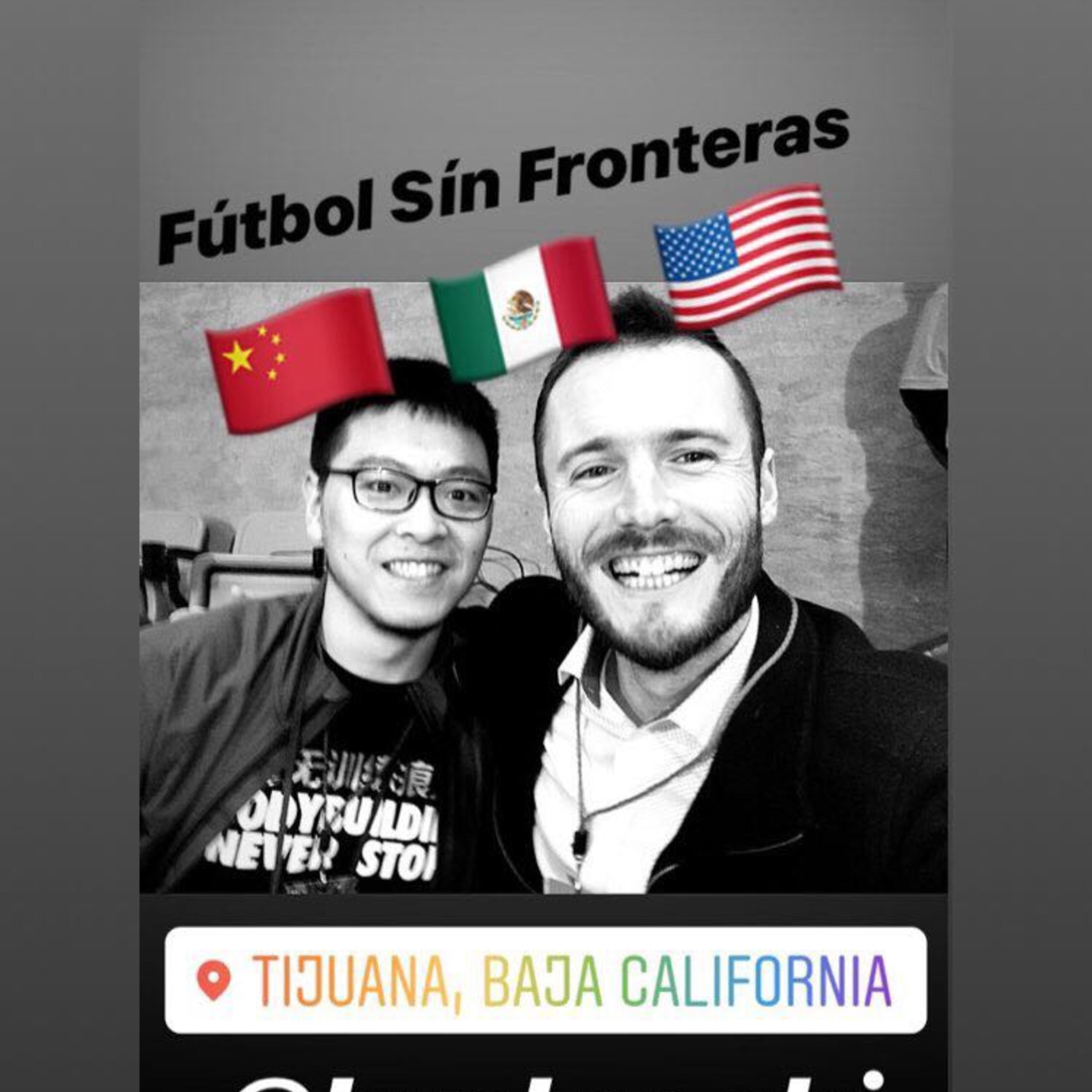
嗯 , 大家刚刚看到的这一段录音呢 ,是我去 , 嗯 , 墨西哥的边境城市蒂华纳看球的时候 , 嗯 , 进球之后现场的一个原音的片段 。
Tijuana5:54
那这当然是非常拥有南美风格的 , 或者是非常拥有拉丁美洲风格的一个解说风格 , 就是 , 嗯 , 解说员会非常激情 , 然后一到进球的时候 , 现场都会立刻喧闹起来 。
然后所以这第一期呢 , 我实际上是这 , 这是很久以前的一次录音 ,是大概今年 3 月份的时候 , 我我跨过了边境 , 我从 , 嗯 , 过了 , 嗯 , 从加州的圣地亚哥过边境到了墨西哥的边境城市蒂华纳 , 然后在那儿看了一场球 。
我当时跟着圣地亚哥本地的一个广播电台的一个主持人 ,他叫 Nate Abarreau,他是专门主持 , 就是 , 嗯 , 墨西哥联赛在这个他们电台的这个解说 。
然后我那次就是联系了他 , 然后跟他一起说我想去看看这个在边境上的球队是什么样的 。 那为什么我会想要去录这一期呢 ?
是因为首先我个人就对边境的问题很感兴趣 , 就是它不是 , 它某种意义上的代表了文化之间的冲突 。
你可以在边境看出很多问题 。 就 , 嗯 , 举一个例子就是 , 嗯 , 就比如说印巴的边境吧 , 印度跟巴 , 印度跟巴基斯坦的边境 , 就是国内的互联网上好像也传过这个视频 , 就是说他们在边境 ,因为这两个国家有比较复杂的历史 , 所以他们会 , 嗯 ,在交接其 , 就就是士兵做边境的哨兵 ,他们做交接的时候会跳一些很奇怪的舞蹈和走奇怪的步子 。
那这个放到你拆开放到中国人一个普通的网民眼中, 就是变成了一个搞笑视频 。 但是对于印度跟巴基斯坦的本国人来说 ,他们看这个问题的时候 , 大家就在一条线这两边 ,但是却产生出了这样的独特的习俗 。
这就是能够直接看到文化的一个地方 , 甚至文化冲突的地方 。 所以我很喜欢边境 。 那去看一场球也是因为 , 就是我本身当然是作为一个体育博客的主播 , 然后我也是一个很资深的体育迷 。
而且我一直认为就是 , 嗯 ,因为体育它以一种 , 你又 , 你既可以说它模拟了竞争 , 又可以说它代替了更大范围的竞争 。
所以它跟当地文化中间那些独特的要素是紧密相连的 。 所以我觉得 , 嗯 , 体育可以 ,也可以看出 , 嗯 , 就是体育跟边境这两 , 跟边境啊 、 移民啊这些元素结合在一起 , 我觉得非常有趣 。
所以我去蒂华纳想要录这一期 。 那 , 嗯 , 很遗憾就是这期当然因为我是跟 Nate 一起去的 , 然后他显然不会说中文 , 所以这期下面的录音会是英文的播客 。
Key Terms8:50
那我的 show notes,也就是这个播客的介绍里 , 还是用中文列出了我们大概在讲什么 。 但如果你没有办法听懂英文的话 , 这一期就确实有些可惜 。
嗯 , 对于能听懂的人, 我想 , 嗯 , 先介绍几个生词 ,因为他们可能过一段时间会高频出现 ,但是对于普通的英语使用者来说 , 这也不是特别常见的词 。
那第一个是 Xolos,Xolos 是 , 嗯 , 这个当地的球队的名字 , 它实际上叫 , 它翻成中文应该叫蒂华纳墨西哥无毛狗队 , 叫 Tijuana Xolos, 嗯 , 或者它全名叫 Xoloitzcuintli, 就是这个词我肯定不会念 ,因为它是当地的纳华语的单词 ,但它指的就是翻译成英文就叫 Mexican Hairless Dog, 就是墨西哥无毛狗 。
那这个就是当地这个球队的队名 , 好像这这种狗就在当地这附近比较会会出没 。 所以 Xolos 这个词就是指这支队 。
然后 Atlas 跟 Cruz Azul,Atlas 是 ,是 , 或者我们应该会说 Atlas,因为因为这期我跟 Nate 我们俩都会说西班牙语 , 所以我们念词的时候时不时会混入西班牙语的发音 。
但是 Atlas 是比较好分辨 , 它是 , 嗯 ,在英文中单词就是地图 ,但是它是瓜达拉哈拉 ,是墨西哥南部的可能他们的第二大或者第三大城市的一支球队 , 叫 Atlas。
然后 Cruz Azul 就是翻译成中文叫蓝十字 , 这个队是墨西哥城 , 就是墨西哥首都的俱乐部 。 这个队我相信是更有名气一些的 , 经常看看世界杯的时候 , 呃 , 我印象很深 , 就是小的时候我 06 年世界杯是我看第一届 , 然后我家里面当时买了一本书 , 就是漫画 ,06 年世界杯所有有进球的球员 , 然后他们的资料 , 然后他们的漫画 ,他们的俱乐部 。
当时我就记得蓝十字这个名字 ,Cruz Azul 非常非常好听 , 这是 , 啊 , 墨西哥城的俱乐部 。 然后第三类 , 第三个单词是 Tailgate,Tailgate 是 , 嗯 ,是中文没有办法直接翻译 , 如果直接翻的话就是后车厢的意思 , 啊 , 就或者说是车尾 , 嗯 ,Tailgate 它中文 , 嗯 , 就是后备箱吧 , 就中文好像是把汽车这后面叫做后备箱 。
那什么叫它这边指的 Tailgate 实际上不只是说后备箱 ,而是说 , 嗯 , 就这是美国独特的一种文化 , 就是 , 嗯 ,有的时候是全家人一起出去 , 或者是自己跟朋友一起出去 , 然后大家开车 , 然后你会把一些吃的喝的放在后备箱里 , 然后大家开到一个大的停车场 , 或者一大片草坪 , 或者是比如说 , 嗯 ,在体育文化里就是球场外面 , 然后大家就在赛前的时
候可能提早两三个小时, 甚至更长时间就到 , 然后就打开这个这个 , 嗯 , 后备箱 , 然后拿出里面冻好的 、 冰好的啤酒 、 酒或者别的吃的什么 , 然后就在比赛前先聊天 。
这是一个非常美式的文化 , 就是你在美国的大学里 Tailgate 非常常见 ,而且 , 嗯 , 嗯 , 我觉得这这真的是就是特别代表美国文化的 。
因为其他国家 , 比如说中国 , 你的 , 你没有那么多人拥有汽车 ,而且也没有那么大地方给人停车 ,而且大家去看场球经常是坐地铁去的 , 所以不会出现 Tailgate 这种这种在停车场里的这种派对 。
但是这是就是美国体育中一个的特色 。 那 , 嗯 , 这个后面的录音里面我们提到 Tailgate 的时候会用来提 ,因为在墨西哥在蒂华纳也出现了 Tailgate, 就很有意思 。
然后第四个词我想要解释的是 Frontada, 那这是西班牙语词了 , 这个是西班牙词里的 border,也就是边境的意思 。
嗯 , 它字面意思就是说因为蒂华纳在边境线上, 所以这个城市本身它就是比较特殊的 , 它就是 , 嗯 ,是它是 , 你可以说它甚至是一个美墨问题的一个缩影吧 , 就是边境问题 。
蒂华纳从从墨西哥的角度 ,他们代表了就是一些北上想要进入美国的 , 嗯 , 移民或者是难民 ,他们都很多人会驻扎在蒂华纳 。
这个城市几乎就是以难民做难民跟移民的生意支撑起来的 。 但另一方面它又是 , 当然是你加州经过圣地亚哥 , 它的物品进入墨西哥的地方 , 所以它的文化是复杂的 。
所以 Frontada 或者英文中的 border 这个词 , 对于当地人来说 , 这就是他们的生活 ,也是他们的经济 ,也是他们的生活的一切 ,也是他们的文化 。
所以这个词我们也时不时的会提到 Frontada, 就是边境的意思 。 嗯 , 这就是我想要解释的几个生词 。
那么接下来就是我跟 Nate 的录音 。 This is actually my first English episode all. So this one I have to do with scripts and translation, but it's fine. No worries. The power, the power of editing.
Sin Fronteras13:58
It'll be great. Allright. Uh, Nate, just introduce yourself first. Uh, my name is Nate Abarrea, the English language radio voice of Club Tijuana, the, uh, the Xolos. Yeah. And you, uh, you recognized my name from the start, Abarrea.
You nailed it. Basque origin and, uh, here living in San Diego nowadays and working here in, uh, Tijuana. And I like to call, uh, where we're sittingright now, uh, a second home, Estadio Caliente. That's awesome. That's awesome. And tell us more about this job and how you get into Tijuana, try to cover the soccer here.
Uh, well, it was a big part of my move to San Diego back, uh, three years ago, almost exactly three years ago. I moved to San Diego from, uh, my roots in Northern California, all around Northern California. And one of the main reasons why I came to San Diego, um, was to have access to this and not only to have access to the Xolos and everything that Club Tijuana are and they, they call themselves el Equipo sin fronteras, the team without borders, fútbol sin fronteras, soccer without borders, and the great connection to, uh, San Diego and then the people of San Diego County and the South Bay and kind of creating one big cross-border community.
I wanted to be a part of that. That was why I came down here. But with that is something that I think is really important, and that is that Xolos for me and for a lot of people are in addition to being this great thing in and of themselves, they're also a gateway into Mexican soccer.
And all of the biggest teams in Mexico, the Chivases, the Américas, the Cruz Azul, all these teams, they have to come here. They come to play games here. And that means a lot to a lot of people where Tijuana is very, uh, separated, shall we say, from a lot of, uh, mainland Mexico, as they kind of call it, and a lot of the teams located more centrally.
And what's crazy about it is at the end of the day, they're the same part of the same league. And, and those big teams, they got to come to Tijuana once or twice a year. And, and we're a part of, uh, of fútbol mexicano.
And I happen to technically live in another country up in San Diego, just about, uh, 22 miles away. That's true. We actually just walk across the border. We see the cars, lines, and everything. It's very interesting that you're doing this job and you're crossing the border every week.
And so you're telling me that Tijuana has itself has a very unique culture here locally. And like being just a visitor here first time, like share with us what are the things that's special about Tijuana that makes this city such a famous town of Mexico and just like how soccer plays into it.
Well, I think soccer plays a huge role in terms of Tijuana's modern, um, I don't really know what the exact word to use is, but as far as Tijuana's, well, Tijuana's just kind of advancement. Uh, Tijuana being, you know, a city that's that's been through a lot, um, and continues to to be plagued with, with, uh, a number of problems.
Xolos Miracle17:00
And there's a beautiful goal in the, uh, U20 game down below usright now. That's the focus of this recording, actually. Good stuff. Good stuff. Yeah. Um, no, Tijuana is, uh, a place that, you know, has has been through a lot.
And this club gave this city, uh, some hope in a time where there wasn't a lot of hope. And it was founded, this club's not that old. This club was founded in 2007 and made it up to the top flight of Mexican soccer in 2007.
In 2011, uh, they made it to the top flight. And in their first year in the top flight, they won the championship. Really? And it's a great, great story. And that sounds like, uh, wow, that that's when it was in Bundesliga, they have the similar story of the Kaiserslautern.
I, I'm not sure. Yeah, Kaiserslautern was, was, uh, I mean, there've been a number of these stories over the years. Leicester City in England was one recently. But we're talking about like a team just got promoted to the top league and they won the championship next year.
Yeah. And, and it's fascinating. This town must have been crazy about it. It was. And, and it gave, it gave these people a lot. And it was something where, you know, you're talking about a team who not only had only been promoted a year earlier, but had only been founded five years earlier.
You know, a team that literally didn't exist until 2007. And then they were Liga MX champions in 2012. And that we talk about, uh, you know, mainland, central, uh, central Mexico and then the, the Equipos grandes and, and that culture.
It really put a bit of a target on, on Xolos in terms of a lot of people, uh, you know, look at purists going on, all these, these new, these new dogs roll in, they win the championship and exactly.
And so I think with that is, uh, Xolos fans kind of embrace that. And there is a bit of that like rebellious chip on the shoulder mentality that, um, that Tijuana has, you know, as far as with, with central Mexico to the south, as far as even with the American side of the border sometimes to the north.
And there's this constant kind of chip on the shoulder that exists. And this club gives people in Tijuana something to truly identify with, something truly positive and beautiful to identify with. And a big part of it was that championship that they won in, uh, in 2012, without a doubt.
That was really interesting. And actually just now when I was thinking about teams got promoted and win the championship, I was, I forgot that actually in the, in the, in the Chinese Super League was a very good example of the Guangzhou team.
They got promoted and they win five or six times together. But that's a totally different situation,right? Because Guangzhou represent like the richest club of the league. It's just a special situation where they just got promoted, but their owner was like Ibrahimović of Chelsea, sort of that kind of style person that they wanted putting all their money and wanted to build like a, like a Real Madrid type of team.
That's what happened. But not so much in Xolos,right? Right. But so what you're describing, are you talking about like before 2011, before they get to the top level of the league, are the, are the football culture here very solid?
Are like the fan group have been always talking about soccer or you're just talking about a new fan culture here that springs about 2011? Um, I would say a, a bit of both. I think there's been a presence of soccer in Tijuana for a long, long time.
However, many Tijuanenses will be the first to tell you that this city for a long time and this region for a long time as far as sports goes, this was, uh, a baseball town. This was a baseball town for a long time.
And they still love baseball in, in Tijuana and all over Northern Mexico. Baseball, as far as Mexican baseball, the, the capital cities, the real strong ones. Or you look across the north, you look across the Monterreys, the Hermosillos, Culiacán, Tijuana.
These are places that have long been, uh, baseball hotbeds. And soccer has mattered in all of these places and, and matters to this day, obviously, in all these places. But there is some great, great baseball ties here in Tijuana.
But throughout the years, there've been various, uh, incarnations, shall we say, of, of football clubs representing Tijuana. And a few of them back in the '90s, uh, back in the early 2000s came agonizingly close to gaining promotion and, and becoming the, the team.
And it just never worked out. Uh, a few different teams existed here in Tijuana going back to the, to the '70s, '80s, and '90s. And, uh, Xolos came along in 2007 and had a real strong backing as far as ownership and support within the city and seemed to actually have a bit of a long-term vision and a better infrastructure than sides that existed here before.
And no, and you're looking at itright now and it's still very much a work in progress. I mean, you see all the construction constantly going on in the stadium. However, when you think back to 2007, that was, I think, the best way to kind of sum up this answer to your question is that a football culture has always existed here.
Xolos are what made that football, soccer culture respected. It's what made that culture something to hang your hat on. And winning the championship in 2012 was a, was a huge part of that. It gave people a real sense of pride going, "We're not just a baseball town anymore that kind of like soccer.
We are, we are a soccer city without a doubt." And Tijuana is proud of their team here with the Xolos. That's really interesting. You see, like for people who, like you guys can't see it, but I'm sitting at a seat, I'mright in front of a construction site, basically half of the side of the stadiums.
Baseball & Tailgate22:30
A lot of the seats are still in construction and people are still coming to games in such an environment, which is extraordinary to me. I've never seen stuff like this before, but I'm telling you, this stadium's really beautiful.
This is a extraordinary stadium. Like I've been to some stadiums in Spain and this one is like really awesome. And I'm also very interested that you just mentioned that this town has been like a baseball town. 'Cause like to most of my audience who are in China, baseball means America or baseball might have some presence in Taiwan, in Japan, but baseball means American culture.
So Tijuana being like a migrant city, American influence here, we can see a lot of English signs here, obviously. So like how are you telling me that, for example, do they, is there a large baseball stadium here? 'Cause like stadium basically means like construction site means development and stadiums itself means like it become a center that people can come to.
So baseball has been a big part of it and we kind of just come back. You were pointing to me all the cars we're put doing in the parking lot. Tell me about that, about the tailgating that it shows some, so many American influence here.
There's, there's American influence, but I think it's also important, uh, to spotlight it in kind of a view of it being just a, a microcosm of Tijuana culture. And, and that this city and this region is very unique in terms of the obvious Mexican presence that exists.
We are in Baja California, Mexico. But with that being said, I'm 22 miles from my front door in San Diegoright now. And that presence exists there. And that's that cross-border community that we talk about. And as far as the, the, um, the tailgate that you referenced goes, Hunter, that was something that I was very excited to, to show you.
And you see the, all the barbecues and pickup trucks and music out there. Right. Well, it's, it's sort of, uh, an American sports tradition with, with a real strong Mexican twist here in Tijuana. I actually don't know if like American soccer leagues, do they like, do the fans do the same thing for tailgate?
I mean, all over, all over America. This is a pretty football thing,right? Like tailgate. Yeah. American football, but kind of just American sports in general. The, the, the concept of tailgating is something that, uh, exists very heavily. And I think it is something that's kind of a beautiful microcosm of the transfrontier community as we call it, the cross-border community where it's a heavy American influence.
But again, it's so cool where it's not just, you know, your tailgate that you're going to find at a, you know, a college football game in the US. It's, it's like that. But then you got Banda groups rolling around.
You got every grill's got carne asada and adobada going and people are out there doing all sorts of different Mexican food recipes and everyone's having a good time. And it really becomes this truly perfect example of what sin fronteras means.
I mean, this is El Equipo sin fronteras. And as far as the baseball stadium goes, if we can get you up to, uh, one of the palcos a little higher up in the stadium here, you'll actually be able to see out about five miles across town to, uh, Estadio Gasmar, which is the, which is the home of, uh, the Toros de Tijuana, which is the baseball team down here.
And, uh, yeah, people, people in this city, they, they love, they love their baseball. They love the Padres down here. People in Tijuana love going up to, to Padres games and very much in the same fashion that the San Diego Padres.
Oh, okay. Yeah. The San Diego Padres, the Major League Baseball team in San Diego. And, um, it's, I think, kind of a reciprocal thing where you have a lot of Americans for years, for decades, uh, Tijuanenses have supported San Diego sports.
Yeah. And for the first time really ever over the last decade or so, but really over the last like five, six, seven years since they won the championship in 2012, a lot of Americans, San Diego County residents come down for games.
And so it's really cool. It's this reciprocal thing where people in Tijuana, they root for San Diego sports teams. People in San Diego, they root for Tijuana sports teams. And it's, it's kind of one and the same. And, and that's a beautiful thing.
And that's what I'm trying to preach here. That's just really awesome. Like, 'cause just now when you were talking about the, when I was thinking about American influence here, I was thinking that always when it comes to diaspora, comes to cultural influences, it's always like mutual.
It's, it's, it can't be like just one side or it can't be just like one layer. It has to be like multiple levels things going on, interactions. And that's what you yourself is pretty much the product does, is it like being like an American journalist covering soccer here or writers writing about the stories like on the both sides of the front of the front data.
I'll just use the word front data. That's much easier, especially if you're here. Gosh. And yeah, like tell, tell us more about like here about the team, also like about Mexican Liga. 'Cause I, I'm, again, I'm explaining to a lot of people who are not very familiar with Mexican League as well, like, like not just comparing to US, but also compared to other clubs in Mexico, how different is Tijuana or like how unique here is.
Oh, very young. Uh, this, the Xolos team are, are still considered by many, you know, the, the new kids on the block, the, the sort of, you know, the, the stepchild who joined the family kind of thing, you know, where there is, uh, still a bit of kind of resentment that exists, uh, from, from other people.
No. I mean, in terms of teams who have, you're talking about a hundred years of history. You're talking about teams who were founded in 1916, teams that were founded in the '20s and '30s who are, you know, looking at this team in Xolos where you're talking a team that was founded 12 years ago.
And so it is that sort of, you know, oh, know, know your place up there in, in Tijuana kind of mentality. And, and like I was talking about earlier, that can be kind of a blessing in disguise for people here because a lot of people wear that with pride.
Oh, that's how you want to treat us. Well, here's a great example for you tonight. Atlas. Atlas is a club with over a hundred years of history. The opponents of Xolos tonight, they were founded in 1916. They are a historically significant club in, in football Mexicano.
Atlas have the longest championship drought of any of the top flight teams. They last won their, their last Mexican League first division championship came in 1951, Hunter. 1951. So you think about that, 102 years of history. Last time they won the championship, 1951.
You're coming up on, you're the, you're the math major here. What are we coming up on? Almost 70 years. I'm going to say that you're the Liverpool fan. That also reminds coming easy, easy. Yeah. We talk about, we talk about title drafts.
Hey, it's been, it's been 29 years for Liverpool. It's been almost 70 for Atlas here in Mexico. And so compare that. You see why I'm bringing that up where think about the resentment if you're an Atlas fan. You're an Atlas fan who's in your 40s or 50s and you've supported this club since your childhood.
And then you watch these guys up in Tijuana found their club in 2007, get promotion in 2011 and win the league title in their first year in the league. How are you feeling if you're an Atlas fan watching that beautiful what to people?
Here is the most beautiful story ever. It's, it's the Xolos story. It's Tijuana's team. It's all these great documentary films and stories to be told for years and years. If you're a fan of a team like Atlas or a team like Cruz Azul that has another well-documented title drought of going on 22 years here in 2019, an Equipo Grande that's won lots of championships in the past going back to the '60s and '70s, but haven't actually won a league title in 22 years.
If you're a Cruz Azul fan looking at that Xolos story going, "God, they come up for less than a year and they win the championship." So with that came a lot of, uh, a lot of hate from a lot of people.
And I think it's, uh, in many ways a symbol of respect, uh, from the rest of the league, that kind of chip on the shoulder that Xolos very much, uh, still wear to this day, I think. Andright now, as far as, you know, present day Liga MX, this is a fun Xolos team.
Playoffs30:20
This is a Xolos team on the riseright now. They've, they've won six of their last seven games in all competitions after a very poor start to the season and up into a, a playoff position. This is a playoff-based league.
Very similar when you talk about American sports influence. Yeah. Top eight make the playoffs and it goes into a, goes into a playoff tournament. And so wait, wait, wait. Quickly give me a like a one minute resume of like how a playoff mode works here in the Liga MX.
There's a last time I was watching the finals of it, I was like, "Huh, how does this work? I am not used to this." I mean, it's a apertura clausura system. So you have two semester seasons that are completely separated from one another.
You have a, a season that starts in July and goes to December and then another one that goes from January to May. Completely separate from one another. And there's a new champion with each one. And there's also playoffs in each of those seasons and in every season in Mexican soccer.
And technically there are two seasons every year. Every year there are two completely separate seasons. Oh, okay. And what that does is creates that's it. I was just wondering. It creates a bit of, it creates a bit of parody is what it creates, Hunter.
It creates, uh, an opportunity for, you know, a team like Cruz Azul who were the first place team last year, um, who made it all the way to the championship, almost broke their title drought, lost in the final.
Um, they're in 12th placeright now. They're having a horrible start. This makes the whole title draw thing even more incredible now. 'Cause you're talking about two seasons every year and then 70 years. That's like 140 seasons. So almost double it.
So yeah, if you're talking about for, uh, well, and for Cruz Azul in particular, 'cause they're a team who's had actually a lot of, uh, close calls, a lot of, uh, they've Atlas haven't really appeared in that many finals.
Atlas have never really gotten too far. They haven't tortured their fans that much. It's just been a long run of dryness. Cruz Azul are well known as the team that have, uh, really tortured their fans in terms of getting so close and then losing in those finals.
And that's what happened this last year against their arch rivals, Clube America, of course. And yeah, Cruz Azul this year are in 12th placeright now and their, their coach is being threatened with his, his job. And, and suddenly Cruz Azul are on the down.
Xolos were, I don't want to say horrible last year, but it was not a good year. They fired their coach partway through the season. They finished in 15th place and I think they scored 11 goals in 17 games.
It was a very rough season. And Mexican football allows for that to feel like ancient history. That was, that was last season. It's like, what are you talking about? That was only a few months ago. Nope. Last season.
Ancient history. So this is a new Xolos team this year. New coach in Oscar Pareja. And it's, uh, it, it is something that, you know, a lot of people have a love and hate relationship with. A lot of purists would prefer for football Mexicano to return to what it was into the '70s, which was a traditional, you know, 34-game season, one team getting relegated at the end of the year, a league champion.
But a lot of people love the playoffs and it's essentially to, to spell it out real quick. Yeah. It's a 18-team league and within each semester season, an apertura clausura season, eight teams make the playoffs. Eight of 18 make the playoffs.
I saw you say AT&T league. Oh, no, no. Oh, okay. Eight of the 18. Sorry. My parent references going over. No, they, they didn't pay. AT&T did not pay me to say that. Yeah. No, no worries. I like the linguistics that we're working with there.
No, uh, eight out of 18 teams make the, uh, the Liga MX playoffs and one plays eight, two plays seven, three plays six, and four plays five. And it's quarterfinals, semifinals, and finals. And they're all two legs and that's the system.
That's how it goes here in Liga MX. I'm still curious, like, how, why would, like, why in the '70s when they all of a sudden start to change it? Like, is there any reason, like, all of a sudden, like, they just think that playoffs money generator?
Oh, really? I mean, it generates a lot. Like new contract with like TV, that kind of thing. Um, I mean, I, I don't want to get in too much of the, the historic specifics of it 'cause I don't really know the full, full background, but I do know that one of the reasons why it's still in place is because, I mean, 'cause like, you like, could you imagine the soccer on the other side of the border has always been playoffs almost, like, or did they change as well?
Yeah. No, MLS has always been a playoff model and it's, it's tough. Like I said, a lot of purists don't like it, but a lot of people enjoy it. I'm, I'm kind of somewhereright. Well, I, I come into Mexico, I all of a sudden become a purist now.
I'm, I'm somewhereright in between and it's somewhere, it's something where, you know, when it gets to those playoffs, the excitement is just brilliant. Like the, the Mexican playoffs are the best entertainment. I mean, it is all or nothing.
Teams that, and a team could go through a whole season, go undefeated the whole season, and then lose their first playoff tie over two legs and they're done and their season's over. And so, you know, purists, they hate it and other people, they love it.
And like I said, I'm somewhere kind ofright in the middle of it all. And I think that these playoffs are not going anywhere. Some people think that Mexico would change to a more traditional system, but I, I don't think it's going anywhere.
Could you imagine if the NFL found a way to have two Super Bowls every year? You imagine if all the NFL executives are like, "Man, we got this mastermind plan. We got two Super Bowls every year. Think about how much money we're going to make."
So, all the thing I know is that advertisement are going to go crazy. Like, they're going to pay like $5 million in two years. The advertising during, uh, during the playoffs and the, the money that is generated, the way that fans get excited during the playoffs, the, the chance that it gives teams late in the season when they're mid-table where it's like, "Hey, you get eighth place, you're in, you're into the tournament," you know?
So it's, it's a, it's a love-hate relationship surely that I've got with it. Um, and I think a lot of people have with it, but I try to, try to embrace it in any way that I can. Gotcha.
Speaking of which, now I've been, we've been talking a lot about like the influences between the different sides of border, like talking about a topic that more Chinese fans are more interested in. So recent years in China, the soccer federation, the government, all the clubs have been putting a lot of money trying to develop young players.
How do you think like the Tijuana or Mexican soccer generally have been doing? Are they doing a good job or do you think there are things that they've been doing very bad that you think they shouldn't be doing it?
Or do you think like compared to the other side of the border? 'Cause US has been struggling as well. They missed the World Cup as everybody knows. Yeah. Which we won't, we won't talk too much about that, Hunter.
Youth Development37:00
Allright. Like I said, how do you think about the youth development here and compared to in the States? Here in Tijuana, it's something that people pride themselves on. It's something that this club, uh, prides itself on as far as youth development goes.
And bringing in a coach like Oscar Pareja, it's huge because that was his one of the, the things that he was most proud of in his time at FC Dallas in, in MLS was, was developing young talent. He earned, earned the nickname Poppy where he's, it's something where it's the concept of he's kind of everybody's Poppy, everybody's kind of honorary uncle or grandfather, you know, godfather character where he's has a real reputation of nurturing young talent and helping them get to that, that next level, uh, in their careers.
But it's also a hard, hard question to answer because it's a club-by-club basis. I think it's, it's important to not give a, you know, a big blanket statement about, you know, Mexican youth development 'cause that could be a whole nother podcast and there's a lot more, uh, people who are a lot more credentialed to talk about it than me.
I can talk about Tijuanaright here and I can tell you that there's a lot of clubs around Mexican soccer who struggle with youth development who have been kind of overtaken by a, a win now, spend now, get veteran stars on the field type mentality, which you have to understand.
That's what it takes in, in the modern age. And you can't necessarily have as much patience as he once did to develop the youth and make sure they come up through the system and promoting from within. But I can tell you that here in Tijuana, that's a cornerstone of what this club is all about.
And there haven't really been over the last couple of years, there haven't really been any major players who've come through the youth, uh, academies, but in the history of this club, the young club, in the history of this club, in the young history of this club, there have been a lot of players who've come through the youth ranks and, and players who have, have offered a lot who were truly bredright here, uh, as, as Xolos and, and from the time they were teenagers.
So Xolos embraced that. A lot of people around Mexican soccer, I feel, need to embrace it a little bit more. Same thing in major league soccer. We got to put emphasis on these things and, and make sure that, you know, something that's been a cornerstone of football clubs all around the world, um, continues to be even in this, this modern age.
And, you know, I'm, I'm talking, I'm talking to someoneright now and you, Hunter, is, you know, familiar with the Chinese Super League. So I don't need to tell you about money and modern football and, and what that's doing to, to, you know, overall philosophy and, well, and, and moving people away from things that have been cornerstones of what this game is all about and teams building from within and building their talent base from within and then accompanying it with signed stars from outside.
That's a perfect recipe and that's been a great recipe for a long time. So I hope that clubs like Xolos and clubs like Santos, clubs like Pachuca, a few other examples around Mexico that I've seen, uh, you know, do this, what we're talking about, I hope that, that more clubs follow suit because, uh, I think we all win when youth is, is being developed into the next generation of footballers.
Yes. Yes. And also talking about, so I'll probably wrap up this as a last question, but also about youth development. Yes. 'Cause he says we've been seeing some American talents now playing in Europe. Like we've been seeing Christian Polisich.
We've been seeing, uh, the, the son of the legend, the Liberian legend that's been baby. Think about, think back about Mexican soccer now. The only name that people can still think of like Dos Santos or Chicharrito, these are the names that's been there for a while now.
So like for Polisich or for, for way out there, they're young names. They're been, they're, they're still going to be there maybe for 10 years or so. So are Mexican reaching also into a youth draw period? Um, I think there's a couple of names.
It's funny you bring up, uh, you know, Christian Polisich, you bring up Timothy Weah, and these are players. Weston McKenney is another player that comes to mind in the Bundesliga. And, uh, there's players who are giving a little bit of excitement and, and breaths of fresh air to, to US soccer and actually giving some hope for the future.
In Mexico, there are a couple of names that come to mind as far as guys who have ventured to Europe who are very youngright now who have a lot of upside for any of your, uh, listeners to, to keep an eye on.
And those two players are, uh, Diego Lainez, uh, who recently left, uh, Clube America after winning the championship back in December and he's now playing, uh, with Real Betis in, in La Liga. Uh, Diego Lainez is someone. Chuki Lozano, uh, is another player.
Irving Chuki Lozano who scored, uh, fans in, in China who were watching the World Cup might remember, uh, the Mexico victory over Germany, uh, at the 2018 World Cup. And you might remember hearing a song, oh, Chuki Lozano, little tune of the White Stripes Seven Nation Army.
That was, uh, one of the main Mexican fan favorite players. Uh, someone who is 23 years oldright now, about to turn 24, still youngish, still a lot of upside, uh, spending his timeright now, uh, at PSV, um, in, in Holland, in, in, um, in, in PSV Eindhoven.
He is a player who I think will be venturing either to La Liga or the Premier League, uh, within, within the next year or two. Uh, Raul Jimenez is another player playing in the Premier League. A Mexican international playing for Wolves, uh, playing for Wolverhampton.
Uh, Raul has been fantastic for Wolves, uh, this season. But yeah, I would say those are the three names as far as Mexicans abroad, Mexican players playing their trade in Europe in the, the top leagues of the world.
You would be definitely well advised to, to look out for, for Chuki Lozano, Diego Lainez, and Raul Jimenez, who's not exactly the, uh, a young player, but Raul Jimenez has still a lot of upside and I think is in his prime, uh,right now and has been doing a lot of good things, uh, for, for that Wolves team.
League Parallels43:00
So yeah, there's a few younger Mexican players to keep an eye on here in the next few years. You see, I choose this question at the end of it because, uh, as I before I came here, I've been thinking of Mexican league as a sort of like a somewhat similar type of Chinese Super League.
It is, it is in terms of, and we were talking about this before we started recording here and, and this idea of big name stars and MLS, Major League soccer has had this rap for a long time and people using the term retirement league.
Liga MX has never had that. This has never been branded by anybody as a retirement league, but there has been some, some love-hate relationships with this league's mentality of bringing in high-priced foreign talent who might not be able to give what they should be giving for the amount of money they're being paid.
And if that money were then maybe better invested into developing youth and, and signing young Mexicans. So there are very, very similar narratives. There's similar narratives in the US, in England, in China, in Liga MX, but I think the, the narrative that you're talking about as far as the similarities between China and Liga MX, they are there, but I think the tides are turning and I think there is some, you know, some young Mexican talent to, to really flourish here in the next, uh, next year or so.
And all of those players that I just mentioned, those are all guys who came from Liga MX. Chuki Lozano was a Pachuca player only, uh, a year ago. Diego Lainez was a Clube America player as an 18-year-old just a couple of months ago.
So now they're taking on that next challenge in their careers. So that's the kind of thing that a lot of people want to see where players are developed in Mexico. Players, the likes of, of Lainez, the likes of Chuki, they're coming through these academy systems.
They're giving, you know, great symbols of pride to their clubs going, "Hey, young players, this is where you come to develop." And then you might transfer over to La Liga. You might get your trip and book your ticket to Holland, Germany, England, wherever it may be.
So I think it's, uh, like many things in life, Hunter, it's about finding a balance. And I think, uh, a delicate balance is something that a lot of Mexican soccer fans want to see as far as, uh, the things we're talking about and the way players develop and, and where they play their trade, where they play their soccer and, and where it is geographically and the level of skill that goes with it and how that relates to the national team.
And a lot of Mexican national team fans want to see as many players just going to Europe as possible. That's pretty much what the Chinese are talking about. You know, you know, and, and there's a very fine balance over there.
And I think ultimately for all sides we're just trying to reach a time that our team can play have a better performance in World Cup or in continental performances. Allright. This has been fantastic. Thank you. Thank you for having my pleasure on my podcast and I wish Tijuana have a very good season this year.
It's a good season. I'm glad you're here for a really fun game. Friday night lights in Tijuana and for, for you out there listening, if you ever get a chance, uh, to come here to Tijuana or come to San Diego, shoot me a message, shoot me a tweet, get at me on Instagram.
Hunter will throw up all the, uh, information for you. I'd love to, love to show people around. And Hunter is, uh, you know, a guest of, you know, there've been many people like Hunter coming to these games and I hope there are many more people like Hunter coming to these games.
People from all different countries around the world coming to experience one of the most unique, I feel one of the most unique footballing experiences in the worldright here at Estadio Caliente. So if you're intrigued by, uh, the conversation we've had, you out there listening, hit me up and we'll get you out here next.
That's very well said. Thank you, Nate. Cheers, Hunter. Yep. 哈喽嗯这期就是我这就是我跟 Nate 的全部的对话那就像结尾的时候 Nate 提到的嗯他的联系方式呢就是 Twitter 我会放在这期节目的介绍里然后他自己也说了他很欢迎别人有人想要联系他跟他一起过边境去看球嗯所以如果有人住在加州想要去看球的话也完全可以去联系他嗯我觉得很有意思的发生在 Nate 身上的一个故事是后来我
Closing46:55
没有记错的话可能是嗯今年的 9 月份左右的时候他遇到了一次嗯他在他在应该是从墨西哥回加州的圣地亚哥的时候过边境因为这条边境线嗯像他们这样就住在当地的人来说是可以走过边境的就是你只要走过海关就好了但是海关他待会会看一下你的证件啊什么的然后他我忘了是什么原因好像是被移民官就是认为他有什么嫌疑然后
把他关进小黑屋嗯然后把他审问了一番但这是一个美国人所以这这个事情挺有意思的就他自己后来觉得很气愤就是你你们就是就应该是在程序上就是移民官跳过了一些呃应该回答的问题就直接把他关了起来然后这个事情我觉得他后来受到了很大的关注因为他的那个 Twitter 被 AOC 就是 Alexandria Ocasio-Cortez 就是纽约嗯他是美国纽约州的一个当纽约州的那个一个一个选区的
众议员然后他特殊就是 Ocasio-Cortez 就是科尔特斯这是这个众议员的名字他的特殊之处在于他是 28 岁就上任我不知道这是不是创下了美国众议院的最最年轻的议员的记录然后他以前是一个社工就是为社区做服务工作的所以他的他他是一个就是很关注社会问题很关注各种各样的弱势群体的一个议员那所以嗯他的那条 Twitter 被这个 AOC 就是科尔特斯转发了之后也
是受到了全国的关注所以但是我觉得这件事很有意思就是你可以看出嗯边境的问题是非常复杂的它不只是对于进来的难民或者移民来说嗯是一个问题对于当地人来说也有自己的麻烦而且甚至不只是身份上的问题可能是对于你的生活跟行政上出现了各种各样的矛盾那这就是这一期的内容嗯希望大家喜欢感谢收听这一期的翻转体育地狱系列第一集
Cruzé el río grande nadando sin importarme dos reales Me echo la migra pa' fuera y fui a caer a Nogales Entré por otra frontera y que me avientan pa' Juárez
De ahí me fui hasta Mauritas y me colé por Laredo Me disfracé de gabacho y me pinté el pelo güero Y como no hablaba inglés que me retachan de nuevo
La migra a mí me agarró trescientas veces digamos Pero jamás me domó A mí me hizo los mandados Los golpes que a mí me dio Se los cobré a su paisano
Por Mexicali yo entré y San Luis Río Colorado Todas las líneas crucé de contrabando y mojado Pero jamás me rajé y vi venía al otro lado
Conozco todas las líneas caminos ríos y canales Desde Tijuana a Reynosa de Matamoros a Juárez De Piedras Negras al Paso y de Agua Prieta a Nogales
La migra a mí me agarró trescientas veces digamos Pero jamás me domó A mí me hizo los mandados Los golpes que a mí me dio Se los cobré a su paisano